Robots on Wall Street: Non-traditional paths to public markets for robotics companies
Agility’s SPAC deal shows there is no one route to a robotics public listing, with SPAC mergers, reverse mergers, and traditional IPOs offering different advantages. The post Robots on Wall Street: Non-traditional paths to public markets for robotics companies appeared first on The Robot Report.
Overview
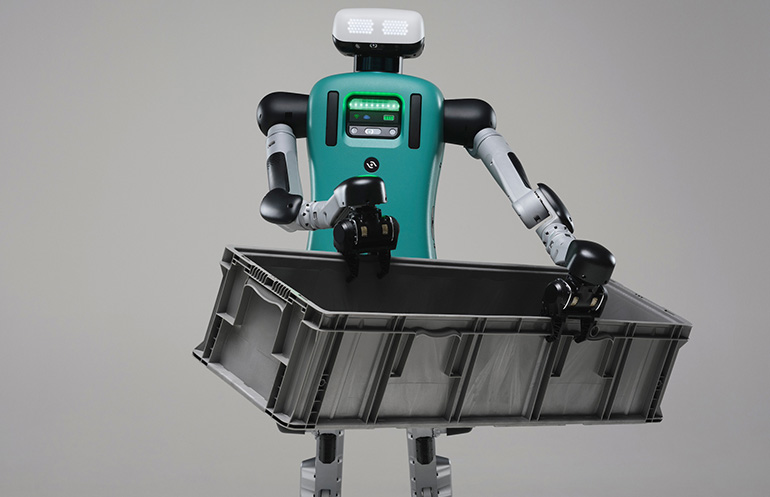
The Digit humanoid robot from Agility, which is an example of a SPAC acquisition. Source: Agility
On June 24, Agility Robotics Inc., a leading humanoid robotics and physical AI company, announced it had entered into a definitive business combination agreement with Churchill Capital Corp XI, a publicly traded special purpose acquisition company or SPAC. The deal values Agility at a $2.5 billion pre-money equity valuation.
The Agility transaction comes at an inflection point for robotics companies seeking to scale their businesses during a time of technological disruption, increased visibility, and public acceptance, as well as labor shortages and onshoring pressures that are accelerating the need for deployment of robotics systems.
While the traditional IPO path remains challenging, de-SPAC transactions and varieties of reverse-merger transactions may prove to be the optimal approach for many robotics companies seeking additional capital and access to public markets.
Agility deal follows SPAC playbook
The Agility deal is expected to generate approximately $620 million of gross transaction proceeds, including approximately $200 million of incremental financing via a private placement of public equity (PIPE) financing. The PIPE is led by Foxconn, alongside other existing and new institutional investors.
Agility’s path to the public markets follows a well-worn SPAC playbook. Churchill XI, sponsored by financier Michael Klein, went public in December 2025 and raised approximately $420 million in its trust account. The transaction is expected to close in 2026, subject to Churchill XI shareholder approval, SEC review of a Form S-4 registration statement, receipt of regulatory approvals, and the satisfaction of other customary closing conditions.
The humanoid robot developer is backed by a roster of strategic investors including DCVC, NVIDIA, Amazon, SoftBank Vision Fund 2, Foxconn, Schaeffler and Playground Global.
Editor’s note: Jonathan Hurst, co-founder and chief robot officer of Agility, will speak about robotics breakthroughs in the opening keynote for the 20th anniversary of RoboBusiness on Oct. 20 in Santa Clara, Calif. Register now to attend.
 Register now and save on your pass to RoboBusiness 2026
Serve Robotics pioneered a non-traditional path
Nearly three years before Agility’s announcement, another robotics company chose a non-traditional path to the public markets. On July 31, 2023, Serve Robotics Inc., which develops autonomous sidewalk delivery robots, completed a reverse merger with Patricia Acquisition Corp., a “shell” corporation, formed without a specific business plan or purpose.
Concurrently with the reverse merger, Serve raised approximately $30 million in financing led by existing investors Uber, NVIDIA, and Wavemaker Partners, with participation from new investors. The financing included a private placement of common stock, the conversion of existing convertible notes and the issuance of warrants to the prior holders of the convertible notes.
Editor’s note: This week, Uber sold its stake in Serve Robotics, citing “different directions” in robotic deliveries, according to Bloomberg.
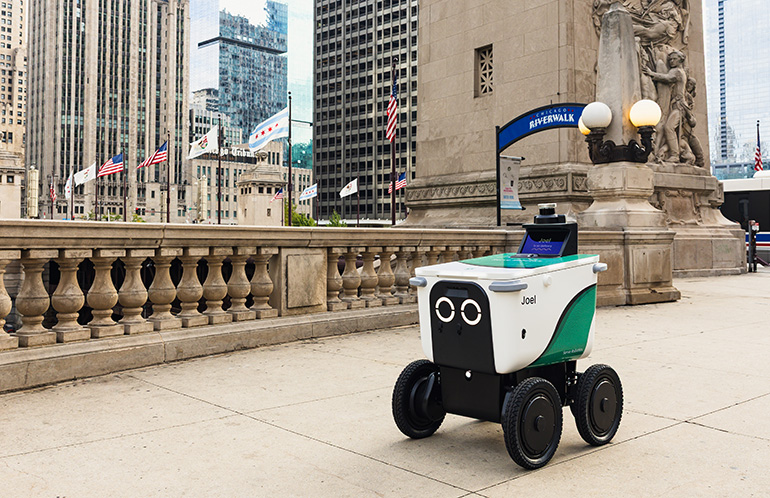
Serve last year expanded deliveries to Chicago with Uber. Source: Serve Robotics
Similarities and differences in the transactions
Both the Agility and Serve transactions share a fundamental characteristic: Each private company chose to bypass the traditional IPO process to access the public markets. Both involved a private robotics company merging with an existing public “shell” entity, and both resulted in the operating company’s business becoming the sole business of the publicly listed entity.
In both cases, the companies were pre-profit — and in Serve’s case, essentially pre-revenue — raising questions about whether traditional IPO participants would have supported these listings through a conventional offering process. Each transaction also involved a financing backed by strategic investors.
However, the structural differences between the two transactions are substantial. Churchill XI is a purpose-built acquisition vehicle that raised capital through its own IPO specifically to fund a future business combination, bringing committed capital in its trust account.
By contrast, Patricia Acquisition Corp. was a dormant “shell” company with no cash and no liabilities at the time of the Serve reverse merger—the entity simply provided the public reporting framework.
The regulatory and disclosure burdens also differ meaningfully. Agility’s de-SPAC transaction requires SEC review of a Form S-4 registration statement and extensive proxy solicitations culminating in a shareholder vote by Churchill XI’s public stockholders—processes that, while less onerous than an IPO, nonetheless impose significant disclosure requirements and regulatory scrutiny.
Serve’s reverse merger, while requiring subsequent SEC filings in connection with the resale registration of certain securities issued in the financing, did not involve the same level of pre-closing regulatory review or public shareholder approval.

Digit stacks crates. The robot is currently deployed in commercial operations. Source: Agility
The broader trend: Are non-IPO paths the future for robotics?
The Agility and Serve transactions do not exist in isolation. During the 2021 SPAC boom, several robotics and automation companies went public through de-SPAC transactions, including Berkshire Grey, Sarcos, Symbotic, and Vicarious Surgical. Autonomous vehicle and related technology companies similarly utilized SPACs to go public during that period.
Several structural factors make non-IPO paths particularly attractive for robotics companies. First, many robotics firms are capital-intensive but pre-revenue or early-revenue, making it difficult to generate the type of financial track record that institutional investors typically demand.
Second, the current IPO market is increasingly dominated by mega-offerings from companies like SpaceX, Anthropic, and OpenAI, which absorb headlines, analyst coverage and institutional capital—making it harder for smaller issuers to compete for investor attention in a conventional offering.
Third, the PIPE process in connection with a reverse merger or a de-SPAC transaction should offer more flexibility on timing and the ability for investors to negotiate valuation privately rather than relying on public market demand in a crowded listing environment.
However, it would be premature to declare non-IPO transactions as the definitive path for robotics companies to become public. Private companies that want to go public via a de-SPAC transaction or a reverse merger may have to overcome certain obstacles that could delay or even block such a transaction from consummating.
For both de-SPAC and reverse-merger transactions, the primary obstacle may be securing the PIPE financing, which has been a challenge in the current fundraising environment. Both Agility and Serve had strong support from existing investors willing to “double down” and lead the PIPE. Even if another lead is available, support from existing investors may be required.
For de-SPAC transactions, first, there is also redemption risk. Existing SPAC shareholders can redeem their shares before closing, which often leaves less capital available than originally expected.
Accordingly, the PIPE financing has become less of a growth-capital tool for the issuer and more of a backstop to satisfy minimum cash conditions. This dynamic has made negotiations more difficult for issuers because PIPE investors are cognizant that they may be the only committed source of cash at closing and can consequently demand stronger economics and protections, to the issuer’s disadvantage.
Second, the track record of de-SPAC companies remains mixed at best, which has led to skepticism about post-closing trading. Several companies that went public through de-SPAC transactions during the 2021 boom have struggled significantly in the public markets.
Third, the SEC has also imposed stricter disclosure requirements on de-SPAC transactions in recent years, narrowing some of the regulatory advantages these structures once offered relative to traditional IPOs.
For reverse-merger transactions, there is also the question of whether the combined company will satisfy the applicable exchange’s initial listing requirements and be able to list its shares on Nasdaq or another national exchange.
For the Serve transaction, since the public company was a “shell” company without a listing, due to Nasdaq seasoning rules for reverse-merger companies, it took almost a year following the merger for Serve’s shares to be listed on Nasdaq, which delayed liquidity for investors and other benefits of being public.
Under Nasdaq’s seasoning rules, a company that went public through a reverse merger may not uplist to Nasdaq until it meets certain requirements, including trading for at least one year on the over-the-counter market, meet a minimum share price requirement and have timely filed its periodic financial reports with the SEC.
There is an exception to the seasoning requirement if the company can consummate a firm commitment underwritten public offering where the gross proceeds to the company will be at least $40 million. Serve uplisted to Nasdaq in connection with a $40 million underwritten public offering in April 2024.
The public company could be a so-called “fallen angel” (a public company that previously conducted sufficient operations to avoid “shell” company classification, but that, under evolving SEC interpretations, may now be treated as a current or former “shell” company for securities law purposes) with an existing Nasdaq listing. In that case, the combined company may be able to retain its listing upon consummation of the transaction.
However, ambiguity relating to the public company’s “shell” company status may also impact the timing of resale registration, Form S-3 eligibility, and the overall attractiveness of a concurrent PIPE.
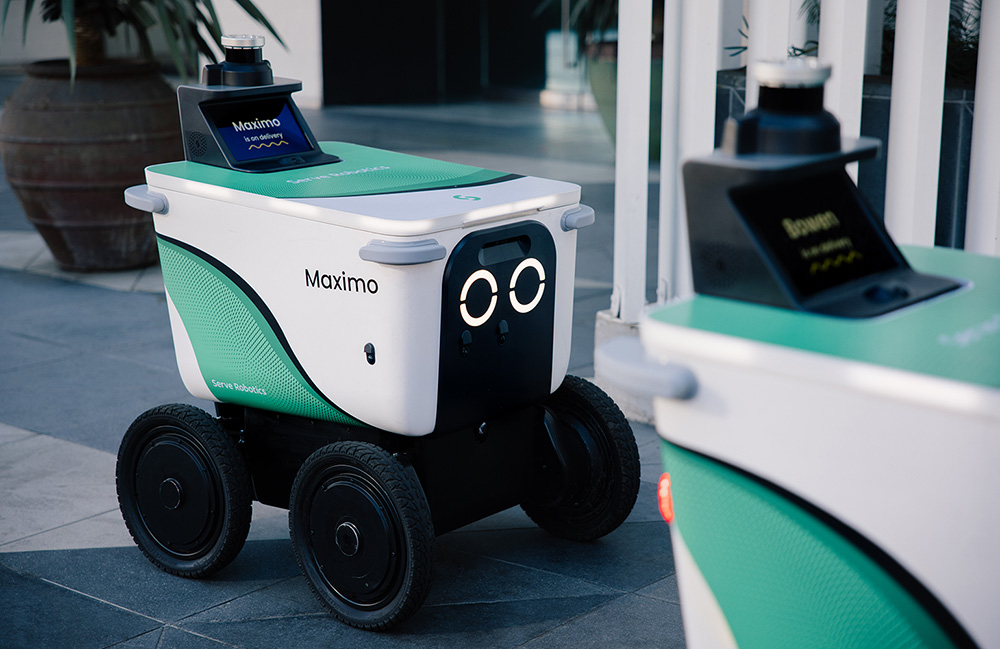
Each Serve delivery robot can hold up to four large pizzas plus drinks and sides in an insulated compartment. | Source: Serve Robotics
Is a SPAC or reverse merger right for you?
For robotics companies specifically, the choice between a traditional IPO, a de-SPAC transaction, a reverse merger, or remaining private will likely continue to depend on the individual company’s stage of development, capital needs, investor base and market timing.
Companies with strong revenue traction and institutional backing may find multiple paths viable. Pre-revenue or early-stage companies with compelling technology but limited financial track records may continue to find de-SPAC transactions and reverse mergers more accessible than traditional IPOs, particularly in a market environment where investor attention is fragmented across an increasingly crowded field of high-profile offerings.
What seems clear is that the traditional IPO is no longer the only credible path—or even the presumptive path—for robotics companies seeking public market access. Whether Agility’s de-SPAC transaction ultimately validates this approach for the robotics sector will depend not just on the transaction’s successful closing, but on the company’s ability to execute commercially in the months and years that follow.
About the authors
 Marc D. Mantell is a Boston-based partner and co-chair of the mergers and acquisitions (M&A) practice at Mintz. Levin, Cohn, Ferris, Glovsky, and Popeo P.C. He advises companies across the technology ecosystem on corporate, M&A and securities matters, with deep experience representing venture-backed companies in strategic transactions and financings.
Details
 Alok Choksi is a New York-based partner at Mintz with a broad corporate and securities practice. He regularly represents investment banks and issuers in complex capital markets transactions, including IPOs, SPACs, follow-on offerings and private placements.
This article is posted with permission.
The post Robots on Wall Street: Non-traditional paths to public markets for robotics companies appeared first on The Robot Report.
Source
Originally published at www.therobotreport.com.